

A lot of professionals are obsessed with efficiency. And so they should be. Efficiency, when done right, can save time, effort and compound your business’ margins.
Today we’re looking at choosing the right quoting tool to streamline your lead-gen processes, enhance sale accuracy, and ultimately help close sales.
But with so many options available, how do you find the one that best fits your unique needs?
This guide delves into the essential features and functionalities of quoting tools, helping you unlock the full potential of your business operations. From automating price calculations to integrating with your existing software, we break down each critical factor you should consider.
Discover how the right tool cannot only save you time but also provide a competitive edge in your industry.
Whether you’re a startup looking to establish your quoting procedures or an established enterprise seeking to upgrade, this guide will empower you to make an informed decision that leads to lasting efficiency.
Understanding the importance of quoting tools
Time is of the essence. Companies are constantly seeking ways to streamline operations and increase productivity.
One of the pivotal tools that can help achieve this is a quoting tool. Quoting tools are software applications designed to automate the process of creating and managing quotes for goods and services.
By automating this process, businesses can save valuable time, reduce human error, and improve the accuracy of their quotes. This not only enhances customer satisfaction but also boosts sales and profitability.
Quoting tools play a crucial role in standardising the quoting process across different departments within a business. This ensures that all team members are on the same page and follow the same procedures when generating quotes.
Standardisation also helps maintain consistency & transparency, which is essential for building trust with clients. When customers receive consistent and accurate quotes, they are more likely to view the business as reliable and professional, leading to repeat business and long-term relationships.
Moreover, quoting tools are essential for maintaining competitive advantage.
In industries where speed and accuracy are critical, having an efficient quoting system can make or break a deal. A well-designed quoting tool can quickly generate quotes, allowing sales representatives to respond to inquiries faster than competitors. This swift response can be the difference between winning and losing a contract. Therefore, investing in a robust quoting tool is not just about improving internal processes; it is also about positioning the business to outperform competitors.

Key features to look for in a quoting tool
When selecting a quoting tool, it is important to consider the features that will best meet your business needs. One of the most critical features is automation. A quoting tool should be able to automate the process of generating quotes, including calculating prices, applying discounts, and adding taxes. Automation reduces the risk of human error and speeds up the quoting process, allowing sales representatives to focus on more strategic tasks.
Another essential feature to look for is customisation. Every business is unique, and a one-size-fits-all approach may not be suitable. A good quoting tool should offer customisation options that allow you to tailor quotes to your specific requirements. This includes the ability to add custom fields, include company branding, and modify the layout of the quote. Customisation ensures that the quotes you generate are professional, accurate, and aligned with your business identity.
Integration capabilities are also an important consideration. A quoting tool should be able to seamlessly integrate with your existing software systems, such as CRM, ERP, and accounting software. Integration eliminates the need for manual data entry, reduces the risk of errors, and ensures that all your systems are working together harmoniously. This not only improves efficiency but also provides a holistic view of your business operations, enabling better decision-making.
How quoting tools improve business efficiency
Quoting tools significantly enhance business efficiency by automating repetitive tasks and reducing manual intervention. One of the primary ways they achieve this is through the automation of price calculations. Manually calculating prices, discounts, and taxes can be time-consuming and prone to errors. Quoting tools automate these calculations, ensuring accuracy and consistency. This not only saves time but also reduces the risk of costly mistakes that can erode profit margins.
Another way quoting tools improve efficiency is by streamlining the approval process. In many organisations, quotes need to be reviewed and approved by multiple stakeholders before they can be sent to the customer. Quoting tools often come with built-in approval workflows that automate this process. Approvers can review and approve quotes with just a few clicks, eliminating the need for back-and-forth emails and reducing bottlenecks. This accelerates the quoting process and ensures that customers receive timely responses.
Quoting tools also enhance efficiency by providing a centralized repository for all quotes. This makes it easy to track the status of quotes, monitor their performance, and generate reports. Sales representatives can quickly access historical quotes, making it easier to follow up with customers and close deals. The centralized repository also facilitates better collaboration among team members, as everyone has access to the same information. This reduces duplication of effort and ensures that the entire team is aligned and working towards common goals.
Comparing Popular Quoting Tools on the Market
There are numerous quoting tools available in the market, each with its own set of features and benefits. One popular option is PandaDoc, a cloud-based quoting tool known for its user-friendly interface and robust features. PandaDoc offers a range of customisation options, allowing businesses to create professional and branded quotes. It also integrates seamlessly with various CRM and ERP systems, enabling a smooth workflow. Additionally, PandaDoc provides analytics and reporting capabilities, giving businesses valuable insights into their quoting process.
Quotify
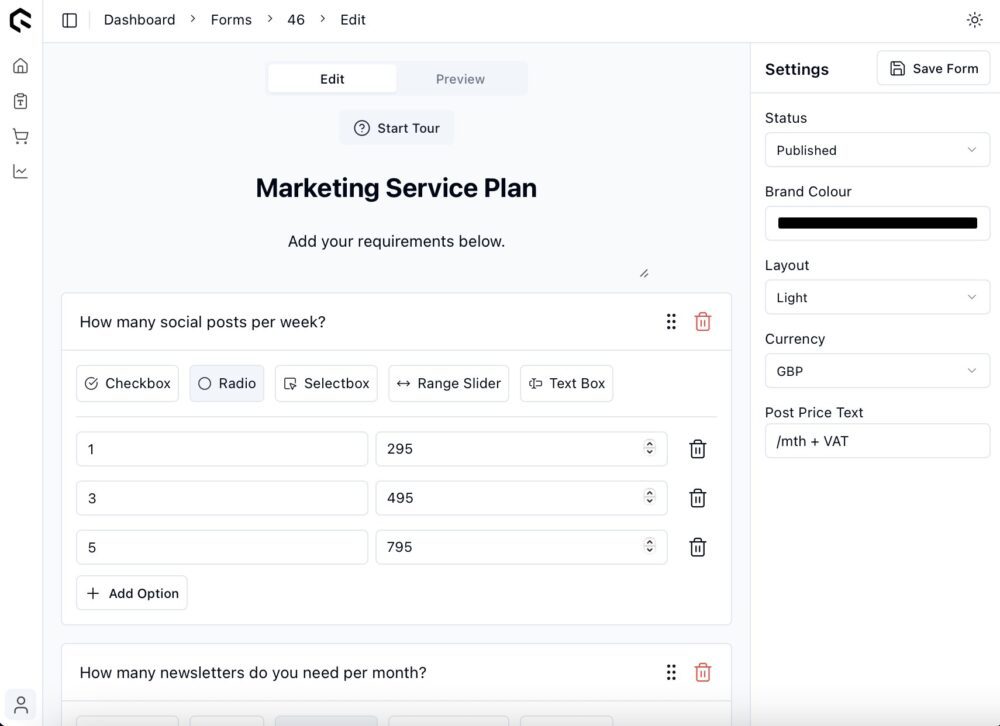
Quotify, which happens to be our tool, takes a lean into the customer self-service space, allowing your (potential) customers to get a quote/estimate instantly. You load up your questions with the available options + pricing, the customer fills out the form and are then immediately presented with a price for your product or service with the option to leave they details and be followed up.
Beyond the form itself, Quotify now also handles the steps after submission: branded PDF quotes, a lead inbox with follow-up reminders, public landing pages, and proper analytics. We covered the lot in the workflow update post.
Sign up today and try it for free!
QuoteWerks
Another well-regarded quoting tool is QuoteWerks. This is a standalone quoting tool that offers extensive customisation options and advanced pricing features. It supports complex pricing models, including tiered pricing, volume discounts, and bundling. QuoteWerks also integrates with a range of CRM and accounting software, making it a versatile choice for businesses with diverse needs. Its robust reporting capabilities enable businesses to track quote performance and make data-driven decisions.
Proposify
Proposify is another popular quoting tool that stands out for its design capabilities. Proposify offers a range of templates and design elements that allow businesses to create visually appealing quotes. It also includes features such as electronic signatures, approval workflows, and real-time collaboration. Proposify integrates with various CRM and project management tools, ensuring a seamless workflow. Its design-centric approach makes it an excellent choice for businesses that prioritise aesthetics and branding in their quoting process.
See how Quotify compares
If you’re weighing Quotify against another tool, we’ve put together side-by-side comparisons against the most common alternatives: Quotify vs HoneyBook, Quotify vs Jobber, and Quotify vs a plain contact form. Each covers what you get, what you give up, and which kind of business each tool is genuinely the best fit for.
User experience: the role of interface and usability
The interface and usability of a quoting tool are critical factors that can impact its effectiveness. A user-friendly interface ensures that sales representatives can quickly and easily generate quotes without extensive training. Look for quoting tools that offer intuitive navigation, clear labeling, and helpful prompts. A well-designed interface reduces the learning curve and minimizes the risk of errors, enabling your team to work more efficiently.
Usability also extends to the customisation options available within the quoting tool. The ability to easily customize quotes to match your business needs is essential for creating professional and accurate quotes. Look for tools that offer drag-and-drop functionality, customisable templates, and the ability to add custom fields. These features allow you to tailor the quoting process to your specific requirements and ensure that your quotes reflect your brand identity.
Another important aspect of usability is the ability to collaborate and share quotes with team members and customers. Look for quoting tools that offer real-time collaboration features, such as the ability to comment, edit, and approve quotes. This enhances communication and ensures that all stakeholders are aligned. Additionally, consider tools that offer mobile access, allowing sales representatives to generate and share quotes on the go. This flexibility is particularly important for businesses with remote teams or those that require quick responses to customer inquiries.
Conclusion: making the right choice for your business
Choosing the right quoting tool is a critical decision that can have a significant impact on your business efficiency and success. By understanding the importance of quoting tools and the key features to look for, you can make an informed decision that aligns with your business needs. Whether you opt for a standalone quoting tool, an integrated solution, or a cloud-based tool, it is essential to consider factors such as automation, customisation, integration capabilities, and user experience.
Evaluating popular quoting tools on the market, considering pricing models and budget considerations, and assessing customer support and training resources are all important steps in the decision-making process. Remember that the right quoting tool can not only save you time and reduce errors but also enhance customer satisfaction and provide a competitive edge in your industry.
Ultimately, the goal is to choose a quoting tool that fits seamlessly into your existing workflow, meets your specific requirements, and supports your business growth. By investing in a robust quoting tool, you can unlock efficiency, streamline your processes, and elevate your business to new heights. Take the time to research, evaluate, and select the best quoting tool for your business, and you will be well on your way to achieving lasting efficiency and success.